Indian Harbour Beach Condos vs Townhomes: Key Differences
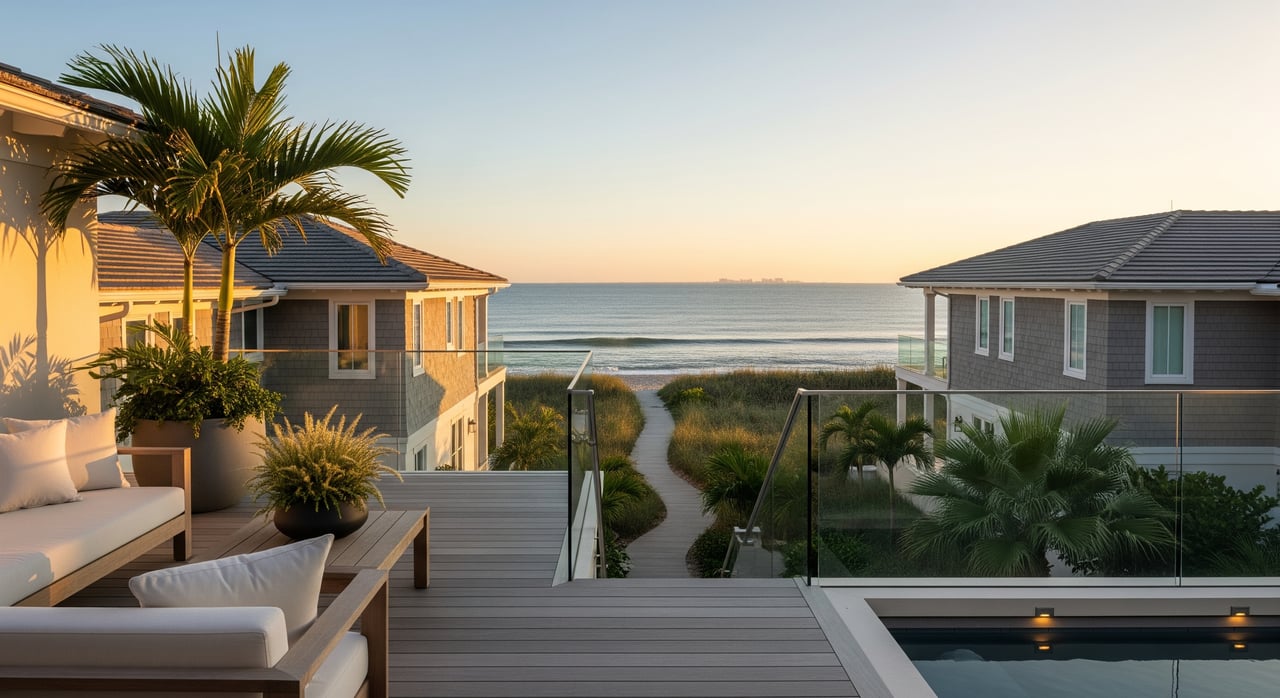
Torn between a condo and a townhome in Indian Harbour Beach? You are not alone. On the barrier island, each option offers a different mix of maintenance, cost, beach access, and lifestyle. In this guide, you will learn the key differences, what to check in coastal communities, and how to decide which fits your plans. Let’s dive in.
| Feature | Condo | Townhome |
|---|---|---|
| Legal ownership | You own the interior of the unit; the association owns common elements and the building shell. Governed by Florida condominium law. | Often fee simple ownership of the home and the land beneath it, usually with an HOA for common areas. |
| Monthly fees | Often higher because the association maintains the building exterior, roof, and amenities. | Can be lower if you handle exterior maintenance; similar to condos if the HOA covers exteriors. |
| Maintenance | Association handles structure and common areas; you handle interiors. | You often handle exterior walls, roof, and private yard; HOA handles shared areas. |
| Insurance | Association carries a master policy; you carry an HO‑6 policy for interiors and contents. Flood insurance depends on location and lender. | You typically carry a homeowners policy that covers the structure and contents; check if HOA has any shared coverage. Flood insurance depends on location and lender. |
| Parking & storage | Assigned spaces; limited guest parking and storage in many buildings. | Private garage and driveway are common; easier storage for gear. |
| Financing | Condo project must meet lender standards; association finances and rules affect loan options. | Usually underwritten like a single‑family home if fee simple; fewer project‑level hurdles. |
In Florida, condos and townhomes are defined by their legal structure, not their look. In a condo, you own the inside of your unit while the association owns and maintains the building and common elements under the state’s condominium law. You will review the declaration, bylaws, rules, budgets, reserves, and insurance as part of due diligence. You can learn more about Florida statutes on the Florida Legislature’s statutes portal.
In many townhome communities, you own the structure and the land parcel. An HOA may maintain shared roads, landscaping, or amenities, and it may or may not include exterior maintenance. Always verify the recorded documents because some townhome‑style properties are legally organized as condominiums. That legal status drives your maintenance, insurance, and financing path.
Condo fees are often higher because the association funds exterior upkeep, roof replacement, common utilities, elevators, landscaping, and amenities. Those fees also build reserves for capital work and storm repairs. On the coast, exposure to salt, wind, and hurricanes can increase both routine and long‑term costs.
Townhome dues vary. If you handle your own roof and exterior, dues can be lower. If the HOA takes on exterior painting or landscaping, expect fees closer to condo levels. In either case, review current dues, what they cover, reserve studies, and the history of special assessments.
Barrier‑island homes face extra wear. Salt accelerates corrosion on railings, hardware, and HVAC units. Wind and windborne debris add stress to roofs, windows, and shutters, and moisture raises the risk of mold and wood rot. These realities often mean shorter replacement cycles and more frequent exterior work.
Condos typically shift exterior responsibilities to the association, which can be a relief if you want low maintenance. Townhomes offer more control over finishes and small yards, but you will likely manage and budget for your roof and exterior. If a property is near canals or dunes, confirm who is responsible for seawalls or dune walkovers.
Parking and storage can be deciding factors. Many condos offer one assigned space per unit and limited guest parking, especially in high season. Storage for bikes, boards, and beach gear is often shared and limited. Ask about guest passes and on‑site storage policies.
Townhomes often include a private garage and driveway, which makes everyday life easier if you have multiple vehicles or lots of gear. You may also have space for small sheds or racks, subject to HOA rules.
Some communities offer private or deeded access to the beach through boardwalks or gates. Others rely on public beach access points managed by the city. Always confirm if access is private or public and who maintains any walkovers or stairs. If private access exists, review how repair costs are handled after storms.
Amenities like pools, clubhouses, and covered parking vary widely. Oceanfront and ocean‑view homes carry a price premium and higher exposure to salt and wind. If beach proximity is a top priority, weigh the premium against expected maintenance and insurance costs.
Florida’s coastal insurance has two parts to understand. Property insurance, including wind and hurricane coverage, can be costlier on the coast and may involve larger deductibles. Flood insurance is separate. Lenders usually require it in FEMA Special Flood Hazard Areas. Rates depend on your elevation and the building’s flood zone.
In condos, the association carries a master policy for the building shell and common elements. You will likely buy an HO‑6 policy for interior coverage, belongings, and loss of use. In townhomes, you usually carry a standard homeowners policy for the structure and contents. In both cases, confirm master policy deductibles and how hurricane deductibles could be passed to owners.
Condo financing depends on the project’s approval and health. Lenders look at the association’s finances, reserves, owner‑occupancy ratios, and litigation. If you plan to use FHA, confirm whether the condo project is approved through HUD’s condominium resources.
Townhomes that are fee simple are often underwritten like single‑family homes, which can simplify financing. For resale, demand on the barrier island is driven by beach proximity, parking, construction quality, storm resilience, and rental rules. Strong association health supports value in both property types.
Use this quick checklist when you tour homes and review documents:
If you want help weighing costs, rules, insurance, and lifestyle tradeoffs for specific addresses, you do not have to figure it out alone. I will walk you through documents, connect you with local lenders and insurers, and help you identify communities that match your priorities. Reach out to schedule a consult with Sandy Legere.
Stay up to date on the latest real estate trends.


Month’s supply of inventory is down to 1.5 months.
My knowledge of the area can save you the time and frustration of looking at homes that do not meet your needs. My marketing experience in selling homes provides results.
Get In Touch With Me To Learn More
1550 Highway A1A Satellite Beach, FL 32937