The 4-Point Inspection Is Deciding Who Buys Your Satellite Beach Home
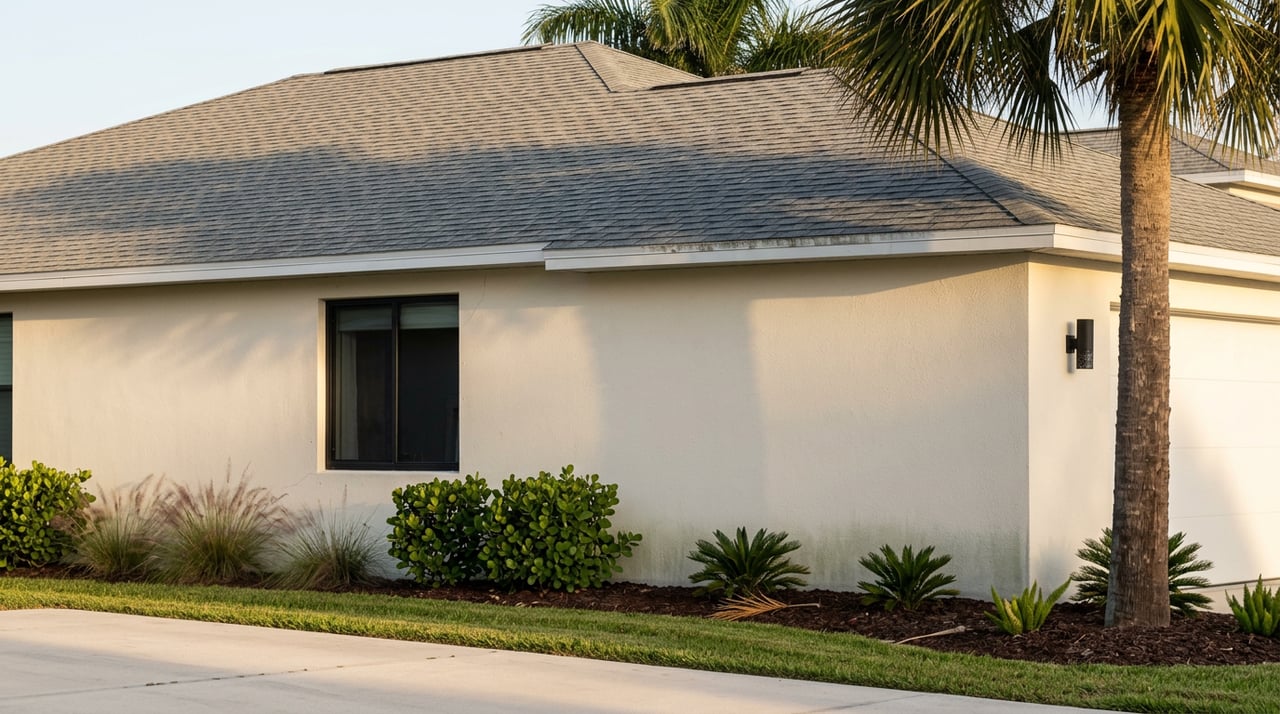
Drive down almost any side street in Satellite Beach and you'll see the pattern before you see the address numbers: low ranch rooflines, terrazzo peeking out under carports, jalousie windows swapped for impact glass somewhere along the way. These are good, solid Florida homes. Most of them are also pushing fifty years old, and that single fact now shapes a home sale here more than curb appeal or square footage ever will.
The median home in Satellite Beach was built in 1975. That's not a demographic footnote. It's the number that determines whether your buyer's insurance company will write a policy at all, on what terms, and how fast.
Florida insurers require a 4-point inspection before writing or renewing a policy once a home crosses a certain age, and in 2026 that threshold has actually loosened a little. Forty years old is now almost universal for triggering the requirement, thirty years is common, and a handful of carriers, Citizens included, still ask at twenty. The hard twenty-year line that used to be standard across the board has softened as carriers compete for business again.
None of that loosening helps a fifty-year-old house. A Satellite Beach home built at the median age clears every one of those thresholds with room to spare. It isn't a borderline case that might get waved through. It's squarely inside the zone where an insurer is going to ask questions before it agrees to take on the risk, and that's true whether your buyer is shopping Citizens or one of the private carriers now competing for Florida business.
A 4-point inspection isn't a home inspection with a different name. It's narrower and it exists for one purpose: to give an insurance underwriter a risk snapshot, not a maintenance checklist. The inspector looks at exactly four systems: roof, electrical, plumbing, and HVAC. They document age, material, and visible condition, take photos, and note anything that reads as a near-term claim risk. They are not there to advise on repairs or flag code violations. That's a separate, full home inspection.
For a house built in the 1970s, the systems most likely to trip an underwriter are the ones you'd expect from the decade: original panels that read as outdated risk, older galvanized or polybutylene plumbing, a roof that's aged past what a carrier wants to insure without an endorsement. A standalone 4-point runs $75 to $200 in most Florida markets, and a wind mitigation inspection costs about the same. Order them together at the same visit and you'll typically pay less than booking two separate appointments, and you'll walk into a listing with both reports already in hand instead of waiting to see what a buyer's inspector finds.
The 4-point requirement is only half of what makes this market distinct. The other half is geography. Every community sitting east of the Indian River Lagoon, Satellite Beach among them along with Merritt Island, Cocoa Beach, Cape Canaveral, Indian Harbour Beach, Indialantic, and Melbourne Beach, gets rated as barrier island property with surge exposure from two directions. Mainland Brevard communities like Palm Bay, West Melbourne, Rockledge, and Viera carry meaningfully lower surge exposure and get priced accordingly.
That distinction matters for a seller because it means your buyer's quote isn't being built off a generic Brevard County number. It's being built off a barrier island number, layered on top of an already-older home, layered on top of whatever that specific house's roof, panel, and plumbing report back. Three variables stacking in the same direction, all of them working against speed and certainty at the exact moment your buyer needs both.
If your buyer has been reading the news, they've likely seen the story that Florida homeowners insurance is finally getting cheaper. It's a real story. Citizens Property Insurance's statewide policy count has fallen to roughly 278,000 as of June 2026, down from a peak above 1.4 million, and 17 or more new carriers have entered the state since the 2022 and 2023 litigation reforms took hold.
Brevard's own numbers tell a sharper version of that story. Citizens' personal-residential policy count in Brevard County fell from 42,238 at year-end 2024 to 7,345 by the end of May 2026, an 83% drop in seventeen months, steeper than the statewide decline over the same stretch. Private carriers are picking off Brevard business fast.
But a rate filing analysis published earlier this year flagged something the statewide headline glosses over: while most of the state was heading toward cuts, several Central Florida counties, Brevard named specifically alongside Orange, Osceola, and Lake, were positioned for increases even as the statewide average moved down. Rate filings vary by carrier and change through the year, so treat that as a signal to check your specific carrier's current filing rather than a fixed number. The practical takeaway for a seller is simpler than the filing details: don't assume your buyer's financing benefits from the same tailwind the state-level story describes. Barrier island exposure and an older roof can mean their quote moves in the opposite direction from the headline, and that's worth knowing before you're mid-contract.
Sandy Legere's typical closed sale lands in the low-to-mid $400,000s, which puts a meaningful share of Satellite Beach listings right at a threshold that changed this year. Citizens now requires flood insurance on any dwelling carrying $400,000 or more in coverage, a rule that took effect January 1, 2026, and that requirement extends to every wind policy statewide by January 1, 2027.
If your home's dwelling coverage sits at or above that line, your buyer isn't just pricing a homeowners policy. They're pricing a second, mandatory flood policy on top of it, in a barrier island flood zone where private flood carriers often beat NFIP pricing by a real margin but still add a line item nobody budgeted for in a first pass at the mortgage calculator. A buyer who hasn't priced that in yet can find their monthly number moving after they're already emotionally committed to the house, which is exactly the moment a deal gets shaky.
The sellers who move fastest through this aren't the ones with the newest homes. They're the ones who removed the guesswork before a buyer's underwriter had the chance to introduce it.
None of this changes what your house is worth. It changes how fast a qualified buyer can actually get to a closing table, and in a market where insurability has become its own negotiation, that speed is worth more than most sellers realize until they're the ones waiting on it.
Does a 4-point inspection replace a full home inspection? No. It's a narrower, insurer-facing report covering only roof, electrical, plumbing, and HVAC, and many buyers schedule both at the same time for different reasons.
Will my home automatically fail because it's from the 1970s? No. Age raises scrutiny, it doesn't guarantee a decline. Homes with documented maintenance and updated systems routinely clear underwriting even well past the 40-year mark.
Should I get these reports done even if I'm not required to as a seller? It's not required, but having current 4-point and wind mitigation reports in hand when you list removes one of the biggest sources of delay and renegotiation once you're under contract.
If you're weighing what an older Satellite Beach home is really worth once insurability is part of the conversation, Sandy Legere can walk you through the local numbers on your specific property. Request Your Free Home Valuation and start with a clear picture of where your home stands before a buyer's underwriter tells you.
Stay up to date on the latest real estate trends.

300,000 Sq. Ft. Engineering Facilty
My knowledge of the area can save you the time and frustration of looking at homes that do not meet your needs. My marketing experience in selling homes provides results.
Get In Touch With Me To Learn More
1550 Highway A1A Satellite Beach, FL 32937